
Advanced Anatomy and Physiology: Metabolism
Metabolism is often simplified as the process of "burning calories," but for the EMS professional, it is the fundamental mechanism of life. At its core, metabolism is the conversion of chemical energy from nutrients into Adenosine Triphosphate (ATP), the universal energy currency of the body. Without a continuous supply of ATP, every physiological process—from the beating of the heart to the firing of neurons—grinds to a halt. This companion guide explores the intricate pathways of cellular respiration and why understanding these microscopic processes is critical for recognizing and treating macroscopic emergencies like shock.
ATP: The Biological Battery
Every cell in the human body requires energy to function. This energy is provided by ATP. When the body needs to perform work, it breaks a high-energy phosphate bond in the ATP molecule, releasing energy and leaving behind Adenosine Diphosphate (ADP). To keep the "battery" charged, the body must constantly recycle ADP back into ATP through cellular respiration. This process relies on two primary "ingredients" delivered by the EMS provider's favorite systems (respiratory and circulatory): Glucose and Oxygen.
Aerobic vs. Anaerobic Metabolism
The body has two ways to produce ATP, depending on the availability of oxygen. Understanding the difference is the key to understanding the pathophysiology of shock.
Aerobic Metabolism (The Efficient Engine)
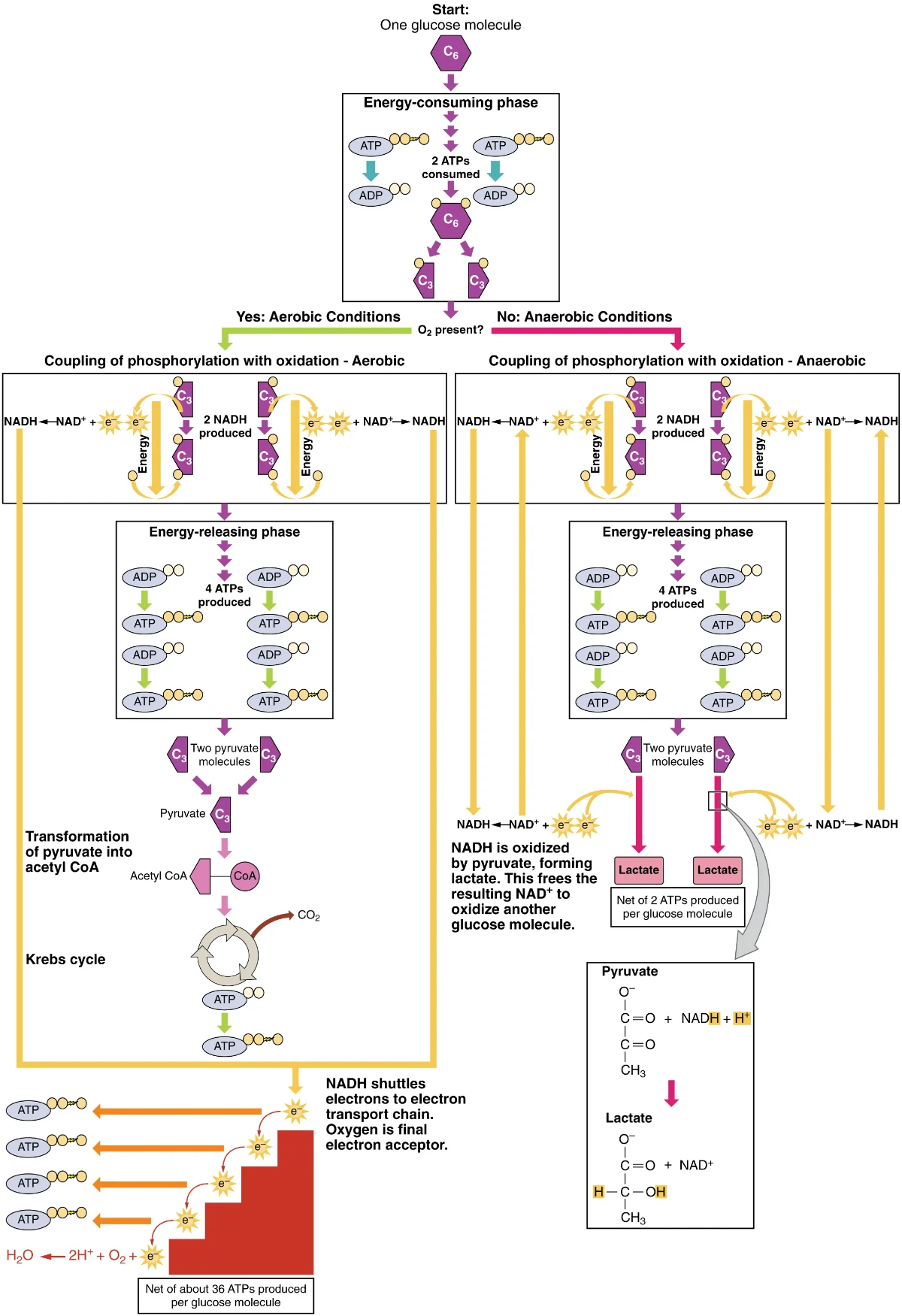
When oxygen is plentiful, the cell performs aerobic metabolism. This occurs in three main stages: Glycolysis (in the cytoplasm), the Krebs Cycle (in the mitochondria), and the Electron Transport Chain (ETC). The ETC is the "heavy lifter," producing the vast majority of the cell's energy.
Inputs: Glucose and Oxygen.
Output: 36 to 38 ATP per molecule of glucose.
Byproducts: Water (H2O) and Carbon Dioxide (CO2), which are easily managed and exhaled.
Anaerobic Metabolism (The Emergency Backup)
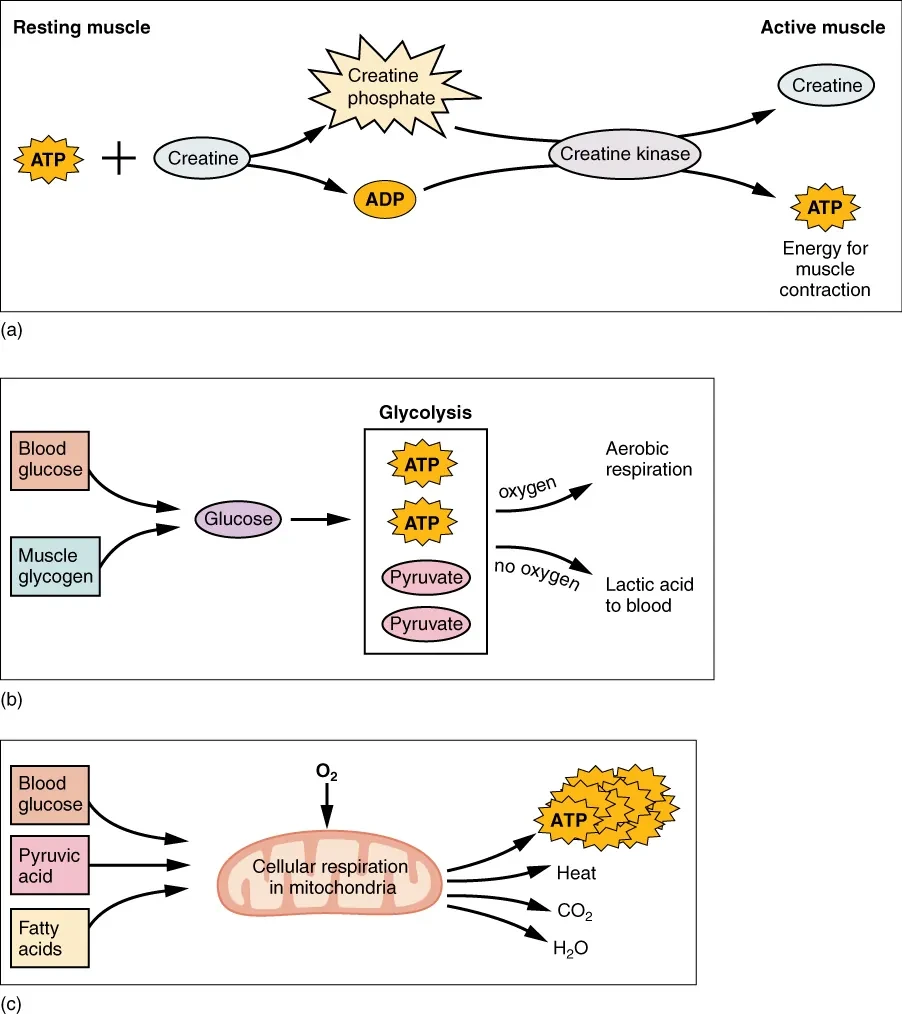
When the cell is deprived of oxygen (hypoxia or hypoperfusion), the Krebs Cycle and ETC shut down. The cell is forced to rely solely on glycolysis for energy. While this keeps the cell alive temporarily, it is an incredibly inefficient and "dirty" process.
Inputs: Glucose only.
Output: Only 2 ATP per molecule of glucose.
Byproduct: Lactic Acid.
The accumulation of lactic acid leads to metabolic acidosis, which denatures proteins, disrupts cellular membranes, and eventually leads to multi-organ failure if the underlying perfusion deficit is not corrected.
The Fick Principle: A Clinical Framework
To ensure aerobic metabolism continues, EMS providers must support the Fick Principle. This principle outlines the three components necessary for adequate oxygenation at the cellular level:
Onloading: Oxygen must enter the lungs and cross the alveolar-capillary membrane into the blood.
Transport: There must be enough hemoglobin and a strong enough pump (the heart) to move that oxygen to the tissues.
Offloading: The oxygen must be able to leave the blood and enter the cells.
Failure at any of these steps results in a shift to anaerobic metabolism—the defining characteristic of shock.
Clinical Application: Using ETCO2 as a Metabolic Window
In the field, we often monitor End-Tidal CO2 (capnography). While we usually think of this as a respiratory measure, it is actually a direct reflection of metabolism. Since CO2 is a byproduct of aerobic metabolism, a sudden drop in ETCO2 in a patient with a patent airway often signifies a failure of perfusion. If the "engine" (the cell) isn't getting "fuel" (oxygen/glucose), it stops producing "exhaust" (CO2). This makes capnography one of our most sensitive tools for detecting early shock and assessing the effectiveness of CPR.
Critical Thinking Questions
In a patient suffering from severe carbon monoxide poisoning, which step of the Fick Principle is primarily being interrupted, and how does this lead to metabolic failure?
Why does a patient in profound shock often present with rapid, deep respirations (Kussmaul breathing) from a metabolic perspective?
If a patient has a blood glucose level of 20 mg/dL, how will this affect their cellular respiration even if their oxygen saturation (SpO2) is 100%?
During cardiac arrest, we often see very low ETCO2 readings (e.g., 8-10 mmHg). Explain why this value increases when we achieve ROSC (Return of Spontaneous Circulation).
A patient has a large pulmonary embolism. They are breathing 24 times a minute, but their ETCO2 is dropping. Is this a ventilation problem or a metabolic/perfusion problem? Explain.
Image Credits: Image from Anatomy and Physiology by OpenStax, licensed under CC BY 4.0