
Advanced Anatomy and Physiology: Homeostasis and Acid Base Balance
Prehospital Academy Lesson 7.9
This lesson provides an in-depth look at homeostasis and acid-base balance, fundamental physiological concepts for advanced EMS providers. Homeostasis is the body's remarkable ability to maintain a stable internal environment despite external changes. Acid-base balance, a critical component of homeostasis, ensures the proper functioning of enzymes and physiological processes by regulating the pH of bodily fluids.
Homeostasis: Maintaining Internal Stability
Homeostasis is the dynamic process by which the body maintains a relatively stable internal environment. This "optimal operating state" is crucial for cell survival and proper organ function. It involves a complex interplay of regulatory mechanisms, primarily operating through feedback loops.
Components of a Homeostatic Control System:
Stimulus: A change occurs in the internal environment.
Receptor (Sensor): Detects the change.
Control Center: Receives information from the receptor and determines the appropriate response.
Effector: Carries out the response to restore balance.
Types of Feedback Loops:
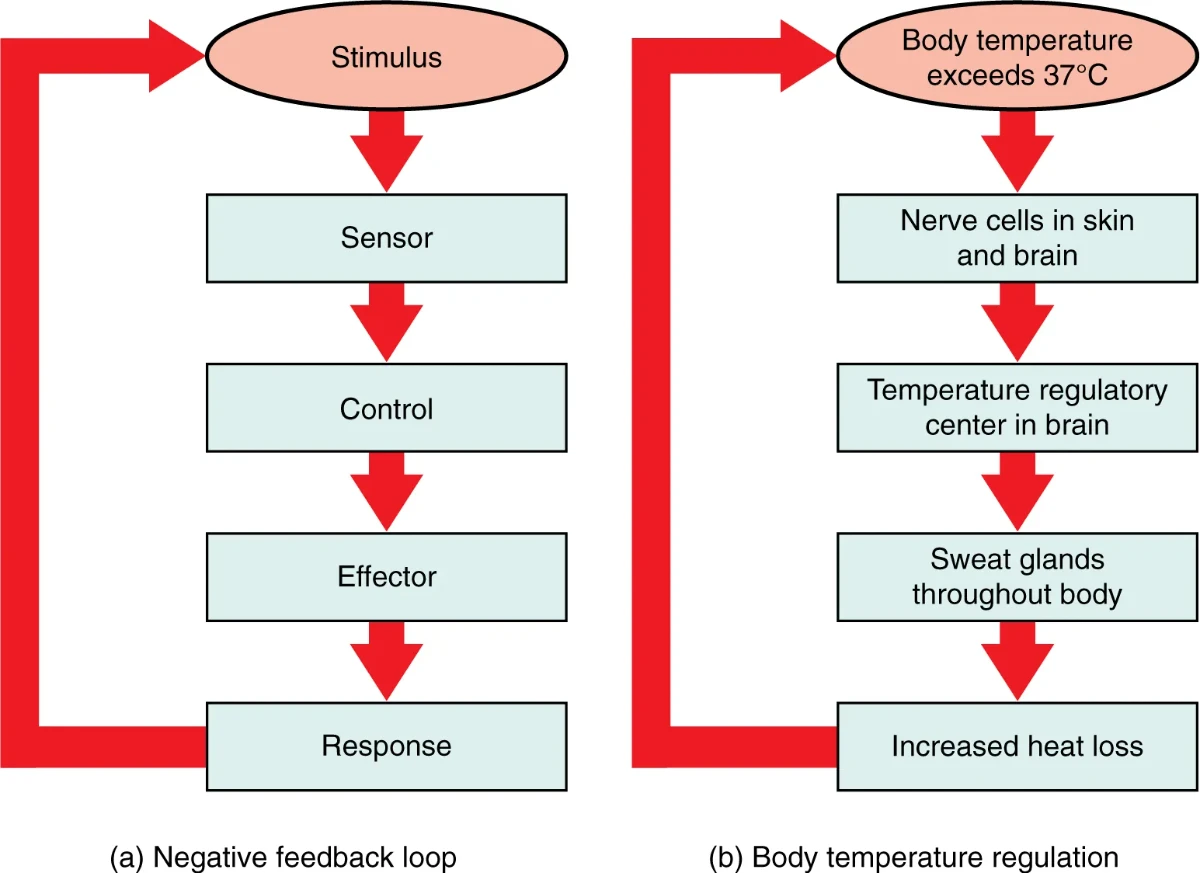
Negative Feedback Loop: The most common type. The response counteracts the original stimulus, bringing the variable back to its set point.
Example: If body temperature rises (stimulus), thermoreceptors detect the change (receptor), the brain signals sweat glands to activate and blood vessels to dilate (effector), leading to heat loss and a drop in body temperature (response), thus negating the original stimulus.
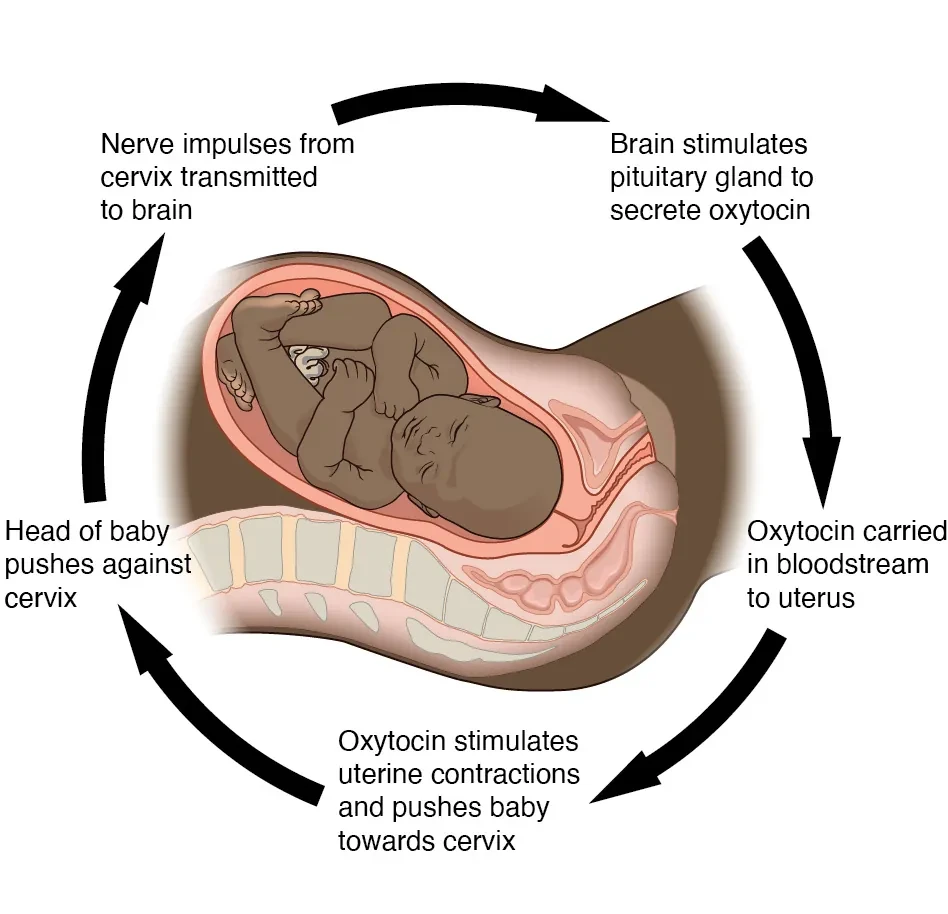
Positive Feedback Loop: The response amplifies the original stimulus. These are less common and often associated with processes that need to be completed quickly or can lead to pathological states if uncontrolled.
Example: Childbirth contractions: labor contractions intensify (stimulus), leading to more oxytocin release (response), which further intensifies contractions until birth occurs.
Acid-Base Balance: The pH of Life
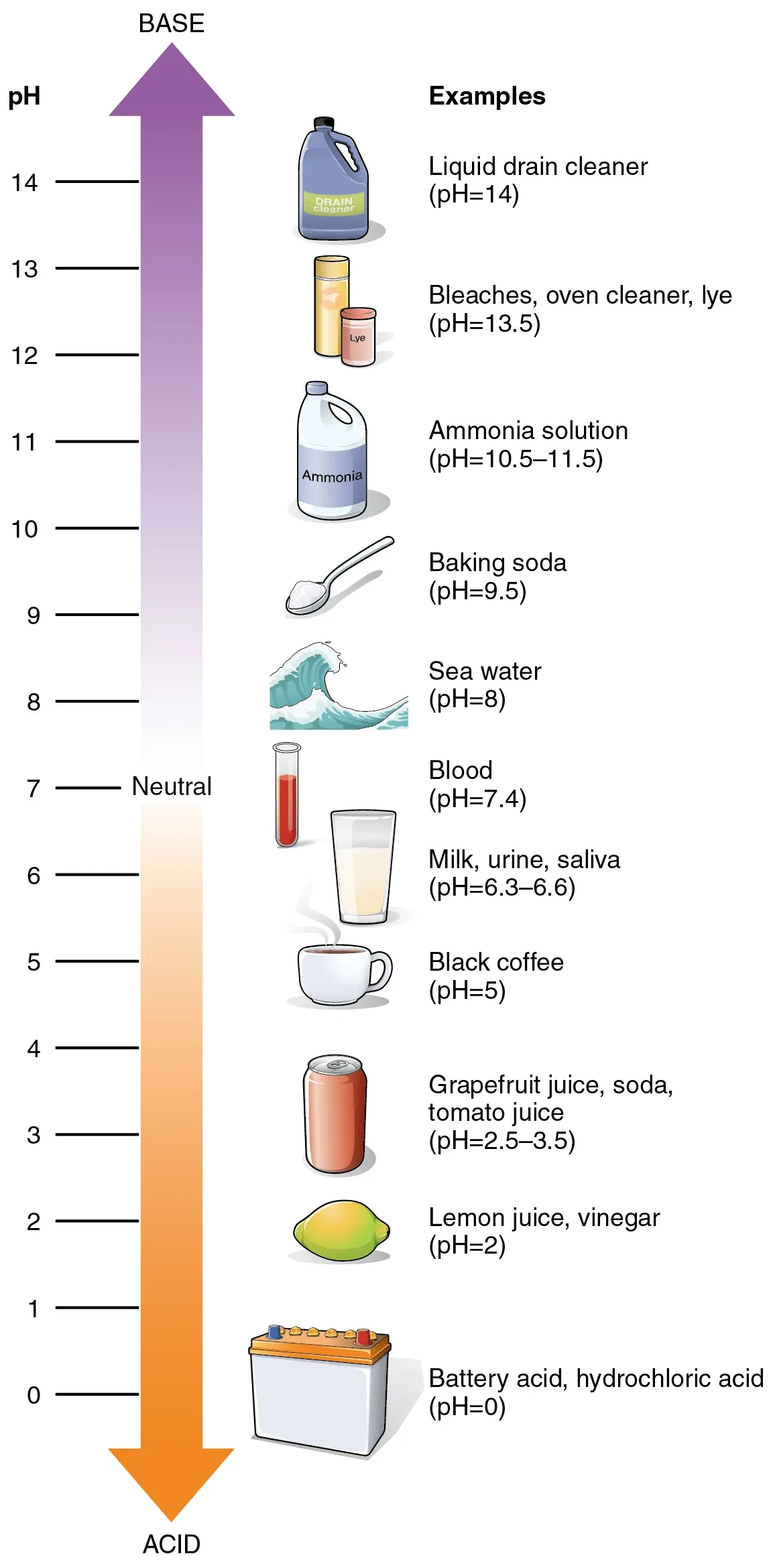
Acid-base balance refers to the physiological mechanisms that keep the pH of body fluids within a narrow, normal range (typically 7.35-7.45). Deviations from this range, acidosis (pH < 7.35) or alkalosis (pH > 7.45), can severely impair cellular function and are life-threatening.
Sources of Acids in the Body:
Volatile Acids: Primarily carbonic acid (H2CO3), formed from CO2 produced during metabolism. Eliminated by the respiratory system.
Non-Volatile (Fixed) Acids: Produced from the metabolism of proteins, fats, and carbohydrates (e.g., lactic acid, ketoacids). Eliminated by the renal (kidney) system.
Regulation of Acid-Base Balance:
The body employs three main systems to regulate pH:
Buffer Systems (Immediate): Chemical buffers (e.g., bicarbonate, phosphate, protein buffers) act rapidly to bind or release hydrogen ions, preventing drastic pH changes.
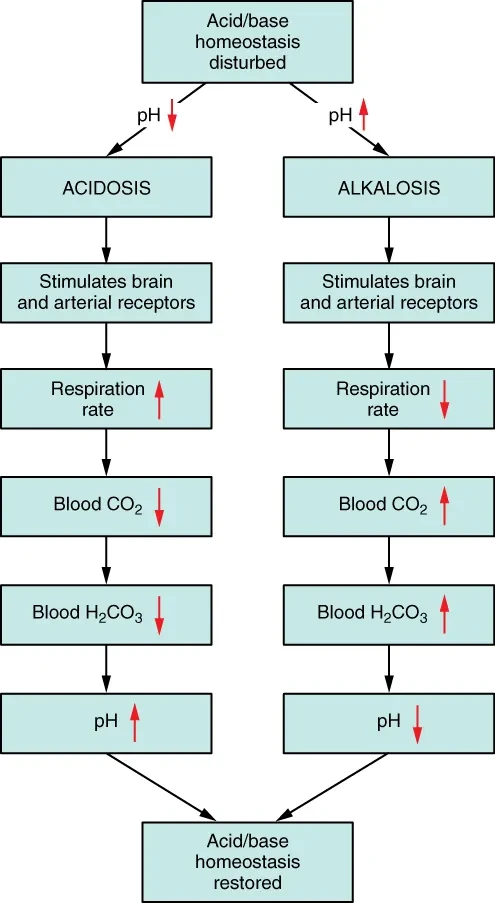
Respiratory System (Minutes to Hours): Regulates CO2 levels.
Increased respiration (hyperventilation) blows off more CO2, decreasing carbonic acid and raising pH.
Decreased respiration (hypoventilation) retains CO2, increasing carbonic acid and lowering pH.
Renal System (Hours to Days): The most powerful but slowest acting. Regulates bicarbonate levels and excretes hydrogen ions.
Excretes excess acids and conserves bicarbonate.
Conserves hydrogen ions and excretes bicarbonate.
Acid-Base Imbalances
EMTs at an advanced level must understand the different types of acid-base imbalances and their physiological consequences.
Respiratory Acidosis:
Cause: Hypoventilation (impaired CO2 elimination) leading to increased CO2 and decreased pH.
Examples: COPD exacerbation, opioid overdose, severe asthma.
Respiratory Alkalosis:
Cause: Hyperventilation (excessive CO2 elimination) leading to decreased CO2 and increased pH.
Examples: Anxiety, hyperventilation syndrome, early sepsis.
Metabolic Acidosis:
Cause: Increased production or decreased excretion of metabolic acids, or excessive loss of bicarbonate, leading to decreased pH.
Examples: Diabetic ketoacidosis (DKA), lactic acidosis (shock), renal failure.
Metabolic Alkalosis:
Cause: Excessive loss of acids or excessive gain of bicarbonate, leading to increased pH.
Examples: Prolonged vomiting, excessive diuretic use.
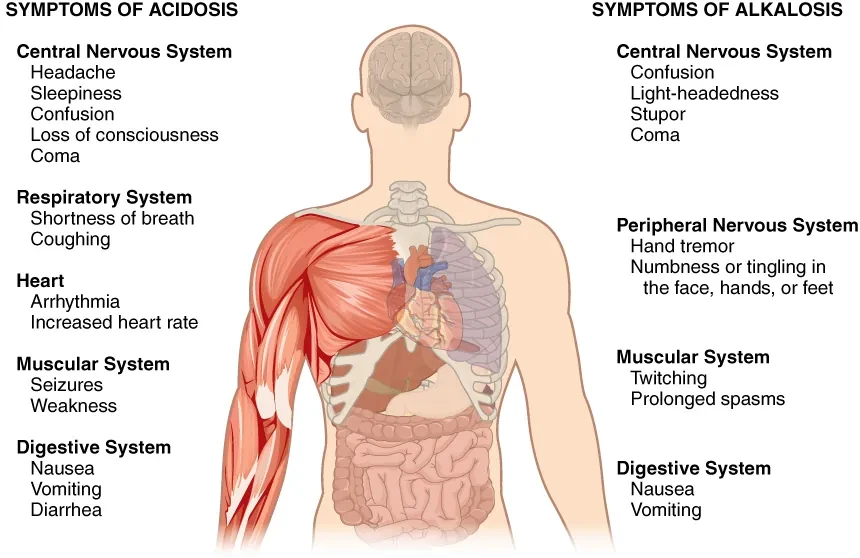
Critical Thinking Questions
Describe the primary role of negative feedback loops in maintaining homeostasis, and provide a physiological example not mentioned in this lecture.
A patient presents with rapid, deep breathing (Kussmaul respirations) and a history of uncontrolled diabetes. Which acid-base imbalance would you suspect, and what is the body's compensatory mechanism in this scenario?
Explain how both the respiratory system and the renal system contribute to maintaining acid-base balance. Which system provides a faster response, and which is more powerful long-term?
You are treating a patient with a suspected opioid overdose who has slow, shallow respirations. What acid-base imbalance is likely developing, and why?
Differentiate between the physiological causes and management considerations for respiratory acidosis versus metabolic acidosis in the prehospital setting.
Image Credits: Image from Anatomy and Physiology by OpenStax, licensed under CC BY 4.0